
 English
 Español
 Français
 Deutsch


Choosing the Right Airless Bottle sizes is an important part of Cosmetic Packaging development. The capacity of an airless bottle affects how much product consumers receive, how often they use the product, how portable the packaging is, how the Pump performs, and how the finished product looks on the shelf. Different Skincare Products require different Airless Bottle Sizes, so capacity should always be selected according to the formula, dosage, product positioning, and intended customer experience.
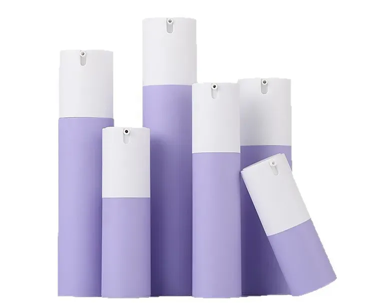
Airless bottle sizes are available in a wide range of capacities for skincare and cosmetic applications. Small Airless Bottles can be suitable for serums, eye products, travel products, and concentrated formulas, while medium and larger airless bottles can work well for creams, lotions, moisturizers, and other products used more frequently. Understanding how capacity affects packaging performance can help brands choose a practical solution before moving into sampling and mass production.
Why Airless Bottle Sizes Matter
Airless bottle sizes are not simply a measurement of how much cosmetic formula can be packaged. Capacity influences the complete packaging experience. A small bottle can be convenient to carry and suitable for premium concentrated products, while a larger bottle may provide better value for daily-use products.
The selected capacity also affects the relationship between the bottle and the product dosage. If a skincare product is used once or twice per day, the brand can estimate how long a particular capacity may last. This helps determine whether a 15 ml, 30 ml, 50 ml, 80 ml, 100 ml, or another capacity is more appropriate.
Airless bottle sizes can also influence production, storage, transportation, and retail presentation. Larger packaging generally requires more material and storage space, while smaller packaging may require more units to meet the same total product volume. Therefore, capacity should be evaluated from both the consumer and manufacturing perspective.
Common Airless Bottle Sizes for Cosmetics
There is no single standard capacity that works for every cosmetic product. Airless bottle sizes can be customized or selected from existing packaging structures according to the product application.
15 ml airless bottles are often suitable for concentrated products, eye creams, travel formats, and smaller premium skincare products. Their compact size makes them convenient for handbags, travel kits, and trial packaging.
30 ml airless bottles are a popular choice for facial serums, essences, creams, and other products where controlled dosage and portability are important. This capacity can provide a balance between compact packaging and sufficient product quantity.
50 ml airless bottles are suitable for many daily skincare products, including facial creams and moisturizers. They offer a moderate capacity while maintaining a relatively compact package size.
80 ml to 100 ml airless bottles can be considered for products that consumers use more frequently or apply over a larger area. These airless bottle sizes can be suitable for lotions, moisturizers, body products, and other larger-volume formulations.
Some cosmetic packaging projects require capacities outside these common ranges. In such cases, Custom Airless Bottle sizes can be developed through mold modification or new mold development.
How to Choose Airless Bottle Sizes by Product Type
The formula type is one of the first factors to consider when choosing airless bottle sizes. Different Cosmetic Products have different application habits, recommended dosages, and expected usage periods.
For facial serums, smaller airless bottle sizes are often practical because serums are commonly concentrated and used in relatively small amounts. A 15 ml or 30 ml package may provide enough product for a defined usage period while keeping the packaging compact.
For facial creams, medium airless bottle sizes may be more appropriate. A 30 ml or 50 ml airless bottle can provide enough capacity for regular daily use while maintaining a premium appearance.
For lotions and moisturizers used over larger areas, larger airless bottle sizes may be more convenient. A higher capacity reduces the need for frequent replacement and can provide a better experience for consumers who use the product every day.
For eye care products, smaller airless bottle sizes are usually easier to handle because the application area is limited and the dosage is relatively low. Compact packaging can also support the positioning of concentrated formulas.
Consider the Product Dosage
One of the most practical ways to choose airless bottle sizes is to calculate the expected dosage per application. The capacity should be considered together with the pump output rather than separately.
For example, if a pump dispenses a small amount of formula each time and the product is used once or twice daily, a smaller airless bottle may provide a suitable usage period. If the pump output is higher or the product is applied to a larger area, a larger capacity may be required.
The dosage should ideally be tested using the actual formula. Viscosity can affect dispensing behavior, and different formulations may perform differently with the same pump system. Testing the airless bottle and formula together provides more useful information than relying only on theoretical calculations.
Brands should also consider whether consumers are expected to use one pump, two pumps, or another amount per application. This can help establish a realistic relationship between Bottle Capacity and expected product lifespan.
Airless Bottle Sizes and Consumer Usage
Consumer habits have a direct influence on the ideal airless bottle sizes. A product designed for daily home use may require a different capacity from a product designed for travel or occasional use.
Travel products benefit from compact airless bottle sizes because consumers usually prefer packaging that is lightweight and easy to carry. Smaller capacities can also be useful for product samples and promotional kits.
Daily-use skincare products often benefit from medium capacities. These airless bottle sizes can provide a reasonable balance between portability and product quantity.
Family-size or body-care products may require larger airless bottle sizes. In these applications, consumers may prioritize product quantity and convenience over compact packaging.
The target market should therefore be considered before finalizing the capacity. Packaging designed for professional skincare, premium facial care, travel products, daily moisturizers, or body care can all require different approaches.
Airless Bottle Sizes and Product Positioning
Capacity can influence how customers perceive a cosmetic product. Airless bottle sizes should therefore match the intended product positioning.
A smaller bottle can communicate concentration, portability, and convenience. This can work well for premium serums and specialized skincare products. A medium-sized bottle can create a balanced appearance for everyday facial care products.
Larger airless bottle sizes may communicate practicality and value, particularly when the product is designed for frequent use. However, larger packaging should still maintain a suitable proportion between the bottle, pump, label, and overall design.
Capacity should not be selected simply because a larger package appears to offer more product. The package should match the actual formula quantity and usage requirements. Oversized packaging can increase material consumption, shipping volume, and storage requirements without providing a meaningful customer benefit.
Consider Bottle Dimensions and Proportions
Airless bottle sizes are related not only to volume but also to physical dimensions. Two bottles with the same nominal capacity can have different heights, diameters, shapes, and internal structures.
A taller, slimmer airless bottle may create a different visual impression from a shorter, wider bottle. The choice can affect how the product fits in the hand, how stable it is on a surface, and how much space it occupies during transportation.
Brands should consider the complete packaging design rather than looking at capacity alone. The bottle body, pump head, cap, label area, decoration area, and base should work together as one package.
For Custom Airless bottle sizes, dimensional development is especially important. Wall thickness, internal components, mold structure, and assembly tolerances all need to be considered to maintain production stability.
Choose the Right Pump for Different Airless Bottle Sizes
The pump is one of the most important components of an airless bottle. Different airless bottle sizes may require different pump configurations or dosage options depending on the formula and application.
A smaller package does not automatically require a smaller pump output. The pump should be selected according to the amount of product that consumers need for each application. The relationship between pump dosage and bottle capacity should be evaluated during product development.
For thin serums, the pump needs to provide smooth and controlled dispensing without excessive output. For thicker creams, the pump needs to work reliably with higher-viscosity formulas.
Testing should include first-use activation, repeated pumping, consistent output, and end-of-product dispensing. This helps ensure that the selected pump works effectively with the chosen airless bottle sizes throughout the product's useful life.
Consider Formula Compatibility
Formula compatibility is essential when selecting airless bottle sizes. The bottle material, internal mechanism, pump, and formula should work together as a complete packaging system.
Skincare formulas can contain water, oils, emulsifiers, active ingredients, botanical ingredients, and other components. Their viscosity and physical characteristics can vary significantly. These differences can influence dispensing performance.
For this reason, brands should provide relevant formula information to the packaging manufacturer before finalizing airless bottle sizes. Actual formula testing can help identify potential issues with dispensing, leakage, material interaction, or long-term performance.
Temperature testing may also be useful when products will experience different storage or transportation conditions. A packaging system that performs well at room temperature should still be evaluated according to the expected supply chain and usage environment.
Airless Bottle Sizes for Different Cosmetic Applications
Airless bottle sizes can be selected according to the specific application of the cosmetic product.
Facial serum: Smaller capacities such as 15 ml or 30 ml can be suitable when the formula is concentrated and used in small quantities.
Face cream: Medium airless bottle sizes such as 30 ml or 50 ml can provide a practical balance between quantity, appearance, and daily usage.
Moisturizer: Medium or larger capacities may be appropriate depending on how frequently the product is used and whether it is intended for facial or body application.
Eye cream: Compact airless bottle sizes can be useful because the application area is small and the required dosage is generally limited.
Body lotion: Larger airless bottle sizes can offer greater convenience because consumers may use more product per application.
Travel skincare: Small airless bottle sizes can reduce package weight and make products easier to carry.
These are general guidelines rather than fixed rules. Actual capacity should always be determined by the formula, dosage, product positioning, and packaging requirements.
Custom Airless Bottle Sizes for Cosmetic Brands
When standard airless bottle sizes cannot meet a product's requirements, custom packaging development may be a better option. Custom airless bottles allow brands to specify capacity, dimensions, shape, color, surface finish, printing, and other details.
A custom project usually starts with technical drawings, reference samples, or a clear packaging concept. The manufacturer can evaluate the design and determine whether an existing structure can be modified or whether a new mold is necessary.
Custom airless bottle sizes can be useful when a brand wants a distinctive product appearance or needs a capacity that is not readily available in standard packaging. However, custom development generally requires more time and tooling investment.
For this reason, brands should clearly define their target capacity and packaging objectives before mold development begins. Early technical communication can reduce unnecessary design changes and help control development costs.
Test Samples Before Confirming Production
Samples provide an important opportunity to confirm whether the selected airless bottle sizes are suitable. A physical sample allows the brand to evaluate the actual dimensions, appearance, hand feel, pump operation, and decoration.
Sample testing should ideally use the actual cosmetic formula. This makes it possible to check whether the pump provides the desired dosage and whether the formula moves smoothly through the airless system.
Brands should also evaluate the package after repeated use. The first few pumps may not provide the same information as long-term operation. Repeated dispensing can reveal whether output remains stable and whether the package continues to perform correctly as the formula level decreases.
Sample approval should take place before mass production. Once the sample is approved, its specifications can be used as a production reference for appearance, dimensions, color, decoration, and functional performance.
How Airless Bottle Sizes Affect Manufacturing
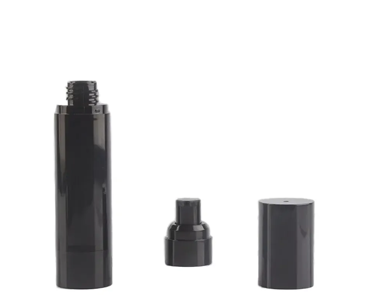
Different airless bottle sizes require different manufacturing considerations. Larger bottles may require different injection molding parameters, material quantities, packaging methods, and transportation arrangements than smaller bottles.
During production, manufacturers need to control dimensions, wall thickness, surface quality, color consistency, component assembly, and pump performance. Larger production volumes require stable processes to maintain consistency across batches.
For custom airless bottle sizes, mold design is particularly important. The mold needs to support reliable injection molding, consistent dimensions, efficient demolding, and stable mass production.
Quality inspection should continue throughout production. Visual checks, dimensional checks, pump testing, decoration inspection, and finished-package evaluation can help identify defects before products are shipped.
Airless Bottle Sizes and Shipping Efficiency
Capacity also influences logistics. Larger airless bottle sizes generally occupy more space per unit, which can affect carton dimensions, warehouse storage, pallet quantities, and transportation costs.
Smaller packaging can improve portability and reduce the space required for individual units, but more units may be required when supplying the same total volume of cosmetic product. The most efficient solution depends on the product and order quantity.
Packaging design should therefore consider both the bottle capacity and the outer shipping package. Proper inner protection and carton design can help reduce damage during transportation while making better use of available space.
How to Choose Airless Bottle Sizes Step by Step
A simple decision process can make capacity selection easier.
Step 1: Identify the cosmetic product. Determine whether the product is a serum, cream, lotion, moisturizer, eye product, gel, or another formula.
Step 2: Determine the recommended dosage. Estimate how much product consumers are expected to use during each application.
Step 3: Estimate the desired usage period. Decide how long one bottle should reasonably last based on the intended application frequency.
Step 4: Select a practical capacity. Compare suitable airless bottle sizes according to product quantity, portability, and positioning.
Step 5: Check the pump dosage. Make sure the pump can deliver an appropriate amount of product for each application.
Step 6: Test formula compatibility. Evaluate the actual product with the selected airless bottle and pump system.
Step 7: Confirm appearance and dimensions. Check bottle shape, proportions, color, decoration, and labeling space.
Step 8: Approve samples before mass production. Use the approved sample as the reference for final manufacturing and inspection.
Why Work With an Experienced Airless Bottle Manufacturer?
Choosing the right airless bottle sizes is easier when the manufacturer can provide technical support throughout development. A capable supplier should be able to discuss capacity, material, pump dosage, mold development, decoration, sampling, quality control, and production requirements.
Yuyao Dingyu Plastic Industry Co., Ltd. is located in Yuyao, Ningbo, Zhejiang, China, and operates its own cosmetic packaging manufacturing facility. The company has a factory area of approximately 5,000 square meters and provides Airless Cosmetic Bottles together with other beauty packaging products.
The company has mold development workshops, injection molding machines, and testing equipment to support customized packaging projects. OEM and ODM services can be developed according to customer drawings or samples, making it possible to adjust bottle structure, capacity, color, and decoration according to project requirements.
Available customization services include new mold development, color matching, silk-screen printing, hot stamping, electroplating, frosting, and other surface treatments. Matching pump heads can also be supplied according to the packaging requirements.
Sample development allows customers to evaluate packaging before confirming mass production. Quality control is performed throughout production, while the company also provides export packaging and international delivery support for customers in different markets.
Common Mistakes When Choosing Airless Bottle Sizes
One common mistake is choosing a capacity based only on appearance. A bottle may look attractive but still be unsuitable for the formula or intended dosage. Function should always be considered alongside visual design.
Another mistake is assuming that a larger capacity is automatically better. Larger airless bottle sizes may provide more product, but they can also increase packaging material, storage space, shipping volume, and overall package weight.
Choosing the pump separately from the bottle is another potential problem. The pump dosage should correspond with the product application and capacity. A mismatch can affect the customer experience.
Skipping formula testing can also create problems. Cosmetic formulas can vary considerably in viscosity and composition, so actual testing provides more reliable information than selecting packaging based only on general assumptions.
Finally, brands should avoid waiting until mass production to identify packaging issues. Early sampling and testing can help detect problems while changes are still easier and less expensive to make.
Conclusion
Choosing the right airless bottle sizes requires more than selecting a number in milliliters. The ideal capacity depends on the cosmetic formula, recommended dosage, usage frequency, product positioning, portability, pump performance, bottle dimensions, manufacturing requirements, and logistics.
Small airless bottle sizes can be useful for concentrated skincare, eye products, samples, and travel packaging. Medium airless bottle sizes can work well for everyday facial creams, serums, and moisturizers. Larger airless bottle sizes may be more suitable for lotions, body care, and products with higher daily consumption.
For brands with specific requirements, custom airless bottle sizes can provide greater flexibility. Working with an experienced manufacturer can help connect capacity selection with material choice, pump dosage, mold development, decoration, formula compatibility, testing, and mass production.
Yuyao Dingyu Plastic Industry Co., Ltd. provides airless Cosmetic Bottles and customized cosmetic packaging solutions for brands requiring different capacities, designs, and finishing options. From sample development and mold customization to production and delivery, a complete packaging process can help brands select airless bottle sizes that are practical, attractive, and suitable for their cosmetic products.
SEO Description
Learn how to choose the right airless bottle sizes for cosmetics based on product type, formula viscosity, pump dosage, usage frequency, capacity, portability, product positioning, and packaging requirements. This guide explains common airless bottle sizes, custom capacity options, formula compatibility, sample testing, manufacturing, quality control, and logistics for skincare packaging.



 왓츠앱
왓츠앱 핸드폰
핸드폰 이메일
이메일 메시지
메시지
논평
(0)