
 English
 Español
 Français
 Deutsch


Choosing the right airless Pump bottle is an important decision for Cosmetic Brands that want to protect formulas, improve dispensing performance, create a professional appearance, and provide a convenient user experience. An Airless Pump Bottle is not simply an attractive packaging container. Its material, capacity, pump system, dosage, compatibility, sealing performance, decoration, and manufacturing quality can all affect how a cosmetic product performs during storage, transportation, and daily use.
For Skincare Products, creams, lotions, serums, gels, emulsions, and other formulations that require controlled dispensing, an airless pump bottle can provide practical advantages over conventional packaging. However, not every airless pump bottle is suitable for every cosmetic product. The right choice should be based on the formula, viscosity, packaging requirements, target market, filling process, product positioning, and expected usage conditions.
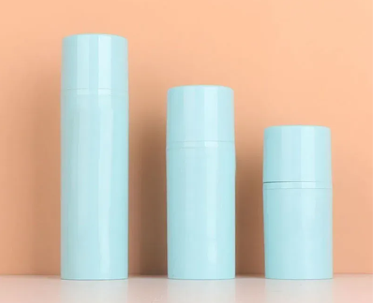
Why Choosing the Right Airless Pump Bottle Matters
The main purpose of an airless pump bottle is to deliver cosmetic formulas in a controlled and convenient way while reducing direct exposure to the surrounding environment. Unlike a conventional bottle that often relies on a dip tube and may require the container to be tilted or squeezed, an airless pump bottle normally uses a piston or similar airless dispensing structure to move the product upward as the pump is pressed.
This structure makes an airless pump bottle particularly useful for modern skincare packaging. The packaging can help reduce unnecessary contact between the formula and outside air during repeated dispensing. It can also provide more controlled dosage, which is useful when consumers need a consistent amount of serum, lotion, cream, or other cosmetic formula.
However, selecting an airless pump bottle should never be based only on appearance. A beautiful bottle that does not match the formula can create dispensing problems, leakage, incomplete product evacuation, or poor customer experience. For this reason, cosmetic brands should evaluate both the external design and internal dispensing system before placing a large order.
1. Consider the Cosmetic Formula First
The formula should be one of the first factors considered when choosing an airless pump bottle. Different cosmetic products have different viscosities, textures, ingredient combinations, and dispensing requirements. A lightweight serum may behave very differently from a thick cream or lotion.
When selecting an airless pump bottle, consider whether the formula is watery, fluid, medium-viscosity, thick, creamy, gel-based, or highly viscous. The pump mechanism needs to work effectively with the formula. If the product is too thick for the selected pump system, dispensing may become difficult. If the product is very fluid and the sealing structure is not suitable, leakage or inconsistent dispensing may become a concern.
Formula compatibility should also be tested with the actual packaging rather than assumed from appearance alone. Cosmetic brands should conduct sample testing before confirming mass production. Filling a small number of airless pump bottles with the actual formula can reveal important information about priming, dosage consistency, pump recovery, leakage, and product evacuation.
2. Choose the Appropriate Airless Pump Bottle Capacity
Capacity directly affects how consumers use a cosmetic product and how the product is positioned in the market. Common airless pump bottle capacities can include small travel-friendly sizes, medium daily-use sizes, and larger professional or family-use formats.
A small airless pump bottle can be suitable for concentrated serums, eye products, trial products, travel packaging, or premium skincare items. Medium-capacity packaging is often practical for daily facial care products such as moisturizers, lotions, and creams. Larger airless pump bottle designs may be suitable for body care products or products intended for frequent application.
Capacity should also be considered together with dosage. A bottle with a larger nominal capacity does not automatically provide a better user experience. Brands should estimate the amount dispensed per pump, the recommended daily dosage, and the expected number of uses. This helps determine whether the airless pump bottle provides an appropriate balance between size, convenience, and product consumption.
3. Pay Attention to Pump Dosage
Pump dosage is one of the most important technical details of an airless pump bottle. Each press should ideally deliver a relatively consistent amount of product. This is especially important for skincare products where consumers are expected to apply a controlled quantity.
For example, if the pump dosage is too small, users may need to press the pump several times to obtain enough product. This can make the packaging feel inefficient. If the dosage is too large, consumers may dispense more product than necessary, increasing product waste.
When evaluating an airless pump bottle, ask the packaging manufacturer about the available pump dosage options. Samples should be tested repeatedly rather than tested only once. Repeated pumping can help identify whether the dosage remains consistent throughout use.
The relationship between pump dosage and formula viscosity is also important. A pump that performs well with a medium-viscosity lotion may not provide the same result with a thicker cream. Therefore, actual formula testing is an essential part of selecting the right airless pump bottle.
4. Select the Right Bottle Material
Material selection affects the appearance, strength, weight, processing options, and overall performance of an airless pump bottle. Common Cosmetic Packaging materials include PP, AS, PET, and other plastic materials selected according to product requirements.
PP Airless Pump Bottles are often considered when brands need a lightweight and practical packaging solution. PP can also support various manufacturing and decoration requirements. AS materials can provide a different appearance and visual effect, making them suitable for brands that place greater emphasis on a more refined packaging presentation.
PET bottles can also be used in cosmetic packaging where their appearance, clarity, strength, and processing characteristics match the application. The correct material should be selected according to the formula, appearance requirements, filling process, transportation conditions, and target price.
Material selection should not be based solely on unit price. A lower-cost airless pump bottle may not always provide the best overall value if it requires additional testing, has inconsistent dispensing, or does not achieve the desired appearance. The better approach is to evaluate material performance together with manufacturing quality and application requirements.
5. Check Formula and Packaging Compatibility
Formula compatibility is a key consideration when purchasing an airless pump bottle. Cosmetic formulations can contain oils, water, alcohol, botanical ingredients, active ingredients, fragrances, and other components that may interact differently with packaging materials.
A reliable airless pump bottle supplier should be able to provide samples so brands can conduct compatibility testing. The test should not be limited to checking whether the product fits inside the bottle. Brands should also observe the packaging after storage and repeated use.
Important points include changes in bottle appearance, deformation, leakage, pump performance, product color, odor, texture, and dispensing behavior. Where necessary, brands can conduct testing under different temperature and storage conditions to understand how the airless pump bottle performs over time.
This step is particularly important for new cosmetic formulations. A packaging design that works well with one formula may not necessarily perform identically with another formula. Testing the actual finished product and actual airless pump bottle combination can reduce unnecessary production risks.
6. Evaluate the Airless Dispensing Structure
The internal dispensing structure is what makes an airless pump bottle different from many conventional Cosmetic Bottles. A typical airless system is designed to move the product upward as the consumer presses the pump, allowing the product to be dispensed without relying on a conventional long dip tube.
The internal piston or airless mechanism needs to move smoothly. Poor component matching can result in problems such as incomplete priming, uneven dosage, product residue, or difficulty dispensing the final portion of the formula.
When choosing an airless pump bottle, brands should ask how the dispensing system is designed and whether it has been tested with similar formulas. It is also useful to test the bottle from the first pump through the final stage of product use.
A high-quality airless pump bottle should provide a reasonably consistent dispensing experience throughout its service life. The pump should recover properly after pressing, and the bottle should remain stable during normal handling.
7. Consider Packaging Appearance and Brand Positioning
Cosmetic packaging plays an important role in how consumers perceive a product. The airless pump bottle is often one of the first physical elements customers see and touch, so its shape, surface finish, color, and decoration should match the positioning of the cosmetic brand.
Customization options may include color matching, silk-screen printing, hot stamping, frosting, electroplating, labeling, and other surface treatments. These options can help brands create packaging that matches their visual identity without changing the fundamental dispensing function.
For premium skincare products, a clean and refined airless pump bottle with carefully selected decoration can create a sophisticated appearance. For everyday skincare products, a simple and practical design may be more appropriate.
Color consistency is another detail worth checking. If a cosmetic brand requires a specific color, sample approval should be completed before mass production. The approved sample can then serve as a reference for production quality control.
8. Think About Filling and Production Requirements
An airless pump bottle should not only work well after filling. It should also be compatible with the brand's filling process. Before ordering, confirm the bottle dimensions, neck specifications, pump structure, filling method, sealing requirements, and production line compatibility.
If a brand is developing a new cosmetic product, it is better to discuss the packaging requirements with the manufacturer during the early development stage. This can help avoid situations where the formula has already been finalized but the selected airless pump bottle cannot be efficiently filled or assembled.
Sample testing can also help brands understand how the bottle behaves during filling, capping, transportation, and storage. A good packaging solution should work as part of the complete production process rather than as an isolated component.
9. Consider Transportation and Storage Conditions
Cosmetic packaging may travel through multiple transportation stages before reaching the final consumer. An airless pump bottle therefore needs sufficient mechanical strength and reliable sealing for normal transportation and handling conditions.
Brands should consider how the packaging will be shipped, stored, and displayed. Products intended for export may experience longer transportation periods and different environmental conditions. Packaging should therefore be evaluated for leakage resistance, structural stability, pump protection, and packaging efficiency.
Proper secondary packaging is also important. Airless pump bottles can be protected using suitable cartons, trays, dividers, pallets, or other packaging methods according to the product size and shipping requirements. A packaging supplier with export experience can help brands determine a suitable packing method for bulk orders.
10. Look for Custom Manufacturing Capability
Many cosmetic brands require more than an existing airless pump bottle. They may need customized capacity, color, bottle shape, decoration, pump dosage, or matching components. In this situation, choosing a manufacturer with OEM and ODM capabilities can make the development process easier.
Custom manufacturing may begin with a drawing, sample, concept, or existing packaging reference. The manufacturer can then support mold development, sample production, material selection, color matching, surface treatment, and mass production.
For brands developing unique cosmetic packaging, mold development capability is particularly important. A manufacturer with its own mold development workshop can generally communicate more directly during the development process. This can help shorten communication cycles and make design adjustments easier.
11. Check Quality Control Before Mass Production
Quality control should be considered before an airless pump bottle enters mass production. Cosmetic packaging contains many individual components, and even small variations can affect assembly, appearance, or dispensing performance.
A professional manufacturer should have appropriate production equipment and testing instruments to monitor key product characteristics. Important checks may include dimensional accuracy, appearance, color, component assembly, pump operation, sealing, leakage, and dispensing performance.
Sample approval is another useful step. Before mass production, the cosmetic brand should confirm the final airless pump bottle sample, including the bottle body, pump, color, decoration, capacity, and other agreed specifications. Clear approval requirements can reduce misunderstandings during production.
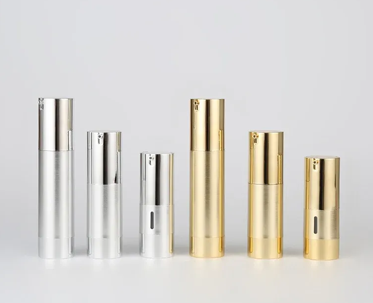
12. Choose an Airless Pump Bottle Manufacturer That Can Support the Full Process
The quality of an airless pump bottle depends not only on the packaging design but also on the manufacturer behind it. A capable manufacturer should be able to support communication from initial inquiry to sampling, customization, production, inspection, packaging, and delivery.
Yuyao Dingyu Plastic Industry Co., Ltd. is located in Yuyao, Ningbo, Zhejiang, China, and operates its own manufacturing facility. The company specializes in cosmetic packaging, with airless pump bottles as an important product category. Its factory covers approximately 5,000 square meters and includes mold development workshops, injection molding machines, and testing equipment.
For customers requiring customized airless pump bottles, the company supports OEM and ODM development based on drawings or samples. Services can include new mold development, color matching, silk-screen printing, hot stamping, electroplating, frosting, and other surface finishing processes. Matching pump heads can also be supplied according to product requirements.
This integrated approach is useful for cosmetic brands that want to simplify packaging development. Instead of coordinating every stage with different suppliers, brands can communicate packaging requirements from sample development through mass production with one manufacturing partner.
13. Ask for Samples Before Ordering an Airless Pump Bottle in Bulk
Sample testing is one of the most practical ways to select the right airless pump bottle. Before confirming a large order, request samples and test them with the actual cosmetic formula.
During testing, check whether the pump primes easily, whether the dosage is consistent, whether the bottle leaks, whether the pump returns correctly, and whether the product can be dispensed smoothly. Also examine the bottle after repeated use rather than evaluating it only when it is new.
Brands should also evaluate the packaging appearance under real lighting conditions. Check the color, printing, surface finish, cap fit, pump feel, bottle stability, and overall appearance. These details can influence the final customer experience.
14. Compare Total Value Instead of Only Unit Price
Price is naturally important when selecting an airless pump bottle, but the lowest quotation is not always the most economical choice. Total packaging cost includes more than the bottle itself. It may also involve mold development, decoration, sampling, inspection, transportation, secondary packaging, and potential losses caused by quality problems.
A stable airless pump bottle can help reduce packaging-related complaints, leakage risks, production interruptions, and unnecessary waste. For long-term cosmetic packaging programs, manufacturing consistency and service responsiveness can therefore be as important as the initial unit price.
When comparing suppliers, brands should consider product quality, customization capability, production capacity, sample response time, communication efficiency, inspection procedures, packaging methods, and delivery support together. This provides a more realistic picture of the overall value of the airless pump bottle supplier.
15. Airless Pump Bottle Applications in Cosmetic Packaging
An airless pump bottle can be used for many types of cosmetic products. Common applications include facial serums, moisturizing lotions, facial creams, anti-aging skincare products, hand creams, body lotions, gels, emulsions, and other personal care formulations that require controlled dispensing.
The airless pump bottle is especially practical when the product needs convenient one-handed dispensing. Consumers can press the pump to obtain a measured amount without repeatedly opening a wide container. This can make daily skincare routines cleaner and more convenient.
For cosmetic brands, the airless pump bottle also provides flexibility in packaging design. Different capacities, colors, materials, surface treatments, and pump configurations can be combined to create packaging suitable for different product lines and price levels.
What Should You Check Before Buying an Airless Pump Bottle?
Cosmetic formula viscosity and ingredient compatibility
Required airless pump bottle capacity
Pump dosage and dispensing consistency
Bottle material and structural strength
Airless piston or dispensing mechanism
Leakage and sealing performance
Color, shape, decoration, and surface finish
Compatibility with the filling and assembly process
Transportation and storage requirements
OEM and ODM customization capability
Sample development and approval procedures
Production quality control and inspection
Minimum order requirements and production capacity
Packaging and delivery arrangements
After-sales communication and technical support
Conclusion: Choose an Airless Pump Bottle Based on the Complete Application
Choosing the right airless pump bottle requires more than selecting a bottle based on appearance or price. The best packaging solution should match the cosmetic formula, dispensing requirements, capacity, material, filling process, transportation conditions, brand positioning, and expected customer experience.
For cosmetic brands, the most reliable approach is to start with the actual product requirements, request airless pump bottle samples, conduct compatibility and dispensing tests, confirm the final specifications, and then proceed to mass production. Working with a manufacturer that can support mold development, customization, surface treatment, quality control, and delivery can also make the entire packaging development process more efficient.
Yuyao Dingyu Plastic Industry Co., Ltd. provides airless pump bottle solutions for cosmetic packaging and supports OEM and ODM requirements from sample development to mass production. With its own manufacturing facility, mold development capabilities, injection molding equipment, testing instruments, surface finishing services, and export experience, the company can provide customized airless pump Bottle Packaging according to different cosmetic product requirements.
When the formula, dispensing system, material, appearance, manufacturing process, and quality requirements are considered together, an airless pump bottle can become more than a container. It can be an important part of product protection, user convenience, packaging presentation, and the overall performance of a cosmetic product.
SEO Description: Learn how to choose the right airless pump bottle for cosmetic products. Discover key factors including material, capacity, pump dosage, formula compatibility, customization, quality control, filling, transportation, and manufacturer selection for reliable cosmetic packaging.



 왓츠앱
왓츠앱 핸드폰
핸드폰 이메일
이메일 메시지
메시지
논평
(0)