
 English
 Español
 Français
 Deutsch


Selecting the Best Airless Bottle for cosmetic packaging is an important decision for skincare and beauty brands. The Right Airless Bottle needs to match the cosmetic formula, product capacity, Pump dosage, packaging appearance, filling process, and expected consumer use. A good airless bottle should not only look attractive but also provide stable dispensing, reliable assembly, suitable formula compatibility, and consistent performance throughout the product life.
Cosmetic Brands use Airless Bottle Packaging for creams, serums, lotions, gels, moisturizers, eye-care products, and many other personal care products. However, different formulas require different packaging characteristics. A thick cream may need a different pump system from a lightweight serum, while a body lotion may require a larger airless bottle than a concentrated skincare product.
This guide explains how to select the best airless bottle for cosmetic packaging by examining material, capacity, pump dosage, formula compatibility, structure, customization, filling, quality control, transportation, and manufacturing support.
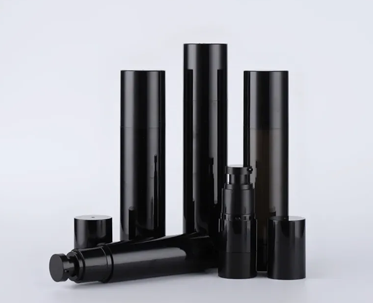
What Is an Airless Bottle?
An airless bottle is a cosmetic container designed to dispense formula through a mechanical pump system. Instead of depending on a conventional dip tube, many airless bottle designs use an internal piston or similar mechanism to move the formula toward the dispensing outlet.
The airless bottle normally includes a bottle body, internal mechanism, pump, actuator, and cap. The exact structure varies between models. Some airless bottle designs are intended for standard cosmetic filling, while others are developed for specific formulas, refill applications, or customized packaging projects.
The main advantage of an airless bottle is controlled dispensing. Consumers can press the pump to release a measured amount of product without repeatedly opening the container or reaching directly into the formula. This makes an airless bottle a practical choice for many modern Cosmetic Products.
Why Choosing the Best Airless Bottle Matters
The best airless bottle is not necessarily the largest, most decorative, or most expensive option. The best airless bottle is the one that matches the actual cosmetic product and production requirements.
If the pump is not compatible with the formula, dispensing can become difficult. If the capacity is unsuitable, the packaging may be inconvenient for consumers. If the material is not properly selected, the bottle may not provide the expected appearance or durability. If the filling process is not considered during development, mass production can become more complicated.
For this reason, cosmetic brands should evaluate the complete packaging system rather than choosing an airless bottle based only on its appearance.
1. Start With the Cosmetic Formula
The first step when selecting an airless bottle is to understand the formula. Formula viscosity, texture, flow characteristics, ingredients, application method, and storage requirements can all affect packaging performance.
Thick creams may require a pump system capable of handling higher viscosity formulas. Lightweight serums may require a different dosage and dispensing structure. Lotions often fall between these two categories and need smooth, consistent pump performance.
The best airless bottle should therefore be tested with the actual formula. Testing a bottle with water or another simple liquid may not accurately represent how the finished cosmetic product will behave.
Formula compatibility testing can examine dispensing consistency, pump activation, leakage, appearance, viscosity changes, and packaging condition over an appropriate period.
2. Choose the Right Airless Bottle Capacity
Capacity is one of the most visible characteristics of an airless bottle, but it should be selected according to actual product usage rather than appearance alone.
Small Airless Bottle Sizes can be suitable for concentrated serums, eye-care products, trial packaging, and travel products. Medium capacities are commonly suitable for facial creams, moisturizers, and daily skincare. Larger airless Bottle Packaging can be more practical for body lotions and products used frequently.
The capacity should also correspond with the product positioning. A premium facial serum may need compact packaging, while a daily-use body lotion may benefit from a larger container that reduces the frequency of replacement.
When selecting an airless bottle, brands should also consider the physical dimensions. Height, diameter, base stability, cap size, and available decoration area can all affect the final packaging design.
3. Consider Pump Dosage
Pump dosage is one of the most important factors in airless bottle selection. The pump determines how much formula is released with each activation. The correct dosage can make the product easier to use and help reduce unnecessary product waste.
A serum may require a relatively small dispensing amount, while a cream or body lotion may require more product per application. However, the correct dosage should be determined through product testing and recommended usage requirements.
The best airless bottle should provide consistent pump performance throughout normal use. The first few pumps and later pumps should both be evaluated during testing. A pump that works well at the beginning but becomes inconsistent later may not be suitable for commercial packaging.
Brands should also consider the force required to activate the pump. Excessive activation force can create an uncomfortable user experience, particularly for products that consumers use several times per day.
4. Select a Suitable Bottle Material
Material selection affects the appearance, durability, weight, processing, and customization possibilities of an airless bottle. Cosmetic packaging manufacturers may offer different material options according to product requirements and design objectives.
When selecting material, consider formula compatibility, structural strength, transparency, color requirements, surface finish, transportation conditions, and expected consumer handling.
The best airless bottle material should provide sufficient mechanical performance while supporting the desired visual appearance. For example, a brand may require a specific color, opacity, surface texture, or premium decorative finish.
Material selection should be evaluated together with the pump and internal components. The complete airless bottle system needs to function reliably rather than having each component evaluated independently.
5. Evaluate the Airless Bottle Structure
Airless bottle structures can vary considerably. Some designs use a piston, while others use different mechanical arrangements. The structure affects filling, dispensing, assembly, and potential refill functionality.
Before ordering an airless bottle, brands should understand how the bottle is filled and how the pump operates. It is important to know whether the bottle is designed for professional filling equipment, manual filling, or a specific production process.
Brands should also confirm whether the airless bottle is single-use or refillable. A standard airless bottle should not automatically be considered refillable. If refill packaging is required, the bottle should be specifically designed and tested for that purpose.
6. Check Formula Compatibility
Formula compatibility should be tested before mass production. The best airless bottle for one cosmetic product may not be the best airless bottle for another product.
Factors to evaluate include viscosity, pH, ingredient characteristics, storage temperature, formula flow, and expected shelf life. The bottle material and internal components should be suitable for the formula.
Testing should use the actual cosmetic formula rather than a substitute whenever possible. The filled airless bottle can then be monitored for dispensing, leakage, appearance, and formula changes.
This step is particularly important for customized cosmetic packaging because changes in formula or packaging structure can affect the final dispensing performance.
7. Think About Product Positioning
The appearance of an airless bottle should match the positioning of the cosmetic product. Packaging for a daily skincare product may use a simple and practical design, while premium skincare may require a more customized shape and sophisticated surface finish.
Brands can consider bottle color, cap design, shape, printing area, and decorative treatments. A consistent airless bottle design can also help create a unified appearance across different products.
For example, a skincare collection may use different capacities for serum, cream, and lotion while keeping similar shapes, colors, or decorative elements. This creates visual consistency without requiring every product to use exactly the same bottle.
8. Consider Airless Bottle Customization
Customization is an important part of cosmetic packaging development. Standard airless bottle models can be customized in terms of color, capacity, decoration, and other external features. For projects requiring a unique shape, a new mold may be developed.
OEM and ODM airless bottle projects may begin with technical drawings, product samples, or packaging concepts. The manufacturer can then evaluate mold requirements, material selection, pump configuration, and production feasibility.
Common decoration options include color matching, silk-screen printing, hot stamping, electroplating, frosting, and other surface finishes. These processes can give the airless bottle a distinctive appearance while supporting a consistent brand identity.
However, decoration should not be considered separately from production. The selected finish should remain stable during filling, assembly, transportation, and normal consumer use.
9. Test the Airless Bottle Before Mass Production
Samples are essential when selecting the best airless bottle. A sample allows the brand to evaluate the actual packaging before investing in large-scale production.
Fill the sample airless bottle with the intended cosmetic formula and evaluate the pump. Check how easily the pump activates, how much product is dispensed, whether the formula flows smoothly, and whether the packaging leaks.
The sample should also be checked for appearance, dimensions, cap fit, decoration quality, and overall handling. If the product will be transported internationally, packaging tests should also consider transportation conditions.
Sample testing can reveal problems that are difficult to identify from photographs or technical drawings. It is therefore one of the most valuable steps in selecting an airless bottle.
10. Evaluate Filling Requirements
The filling process is another important consideration. Different airless bottle structures can require different filling methods. Some are designed for specific filling equipment or assembly procedures.
Before placing an order, confirm the filling opening, recommended filling quantity, assembly sequence, and production requirements. This information can help ensure that the selected airless bottle fits the brand's existing filling process.
Filling accuracy is particularly important in mass production. Overfilling may interfere with the internal mechanism, while underfilling may affect product quantity and consumer expectations.
The best airless bottle should not only work well in the hands of consumers but also be practical for the manufacturer's production line.
11. Check Airless Bottle Quality Control
Quality control should cover the complete airless bottle rather than focusing only on the bottle body. Important checks can include dimensional accuracy, appearance, pump dosage, leakage resistance, assembly, capacity, and dispensing performance.
For customized airless bottle packaging, color and surface finish should also be inspected. Printing, hot stamping, electroplating, frosting, and other finishes should meet the agreed specifications.
For cosmetic applications, formula compatibility should be tested with the finished airless bottle. Repeated dispensing tests can also help determine whether the pump maintains stable performance throughout product use.
Consistent quality control is especially important for large OEM orders because small variations can become significant when thousands of units are produced.
12. Consider Transportation and Packaging
Transportation can affect cosmetic packaging performance. The best airless bottle should be suitable for storage, handling, carton packing, transportation, and delivery.
During shipping, bottles may experience vibration, impact, pressure, and temperature changes. The packaging should therefore be packed securely to reduce movement and prevent surface damage.
For international orders, brands should also consider transportation distance, shipping conditions, carton structure, palletization, and warehouse storage. The final packaging system should be tested under realistic conditions where appropriate.
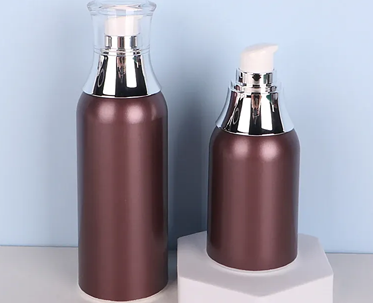
13. Select an Experienced Airless Bottle Manufacturer
The manufacturer plays an important role in the success of an airless bottle project. A capable supplier should provide clear specifications, samples, technical support, customization, quality control, and mass production capabilities.
For OEM and ODM projects, manufacturing support is particularly important. A project may require mold development, color matching, pump matching, printing, surface finishing, sample evaluation, and production inspection.
Yuyao Dingyu Plastic Industry Co., Ltd. is a cosmetic packaging manufacturer located in Yuyao, Ningbo, Zhejiang, China. The company operates its own manufacturing factory and has mold development workshops, injection molding machines, and complete testing instruments.
The company specializes in Airless Bottles and other cosmetic packaging products and supports OEM and ODM development based on drawings or samples. Services include new mold development, color matching, silk-screen printing, hot stamping, electroplating, frosting, pump matching, sampling, and mass production.
For brands searching for the best airless bottle, this type of integrated manufacturing support can make communication and development more efficient from the initial concept through final production.
Common Mistakes When Choosing an Airless Bottle
One common mistake is selecting an airless bottle based only on appearance. A visually attractive bottle may not provide suitable dispensing performance for the intended formula.
Another mistake is ignoring pump dosage. A pump that releases too much or too little product can create problems for consumers and affect product usage expectations.
Some brands also select bottle capacity without considering actual consumer habits. A container that is too large may be inconvenient for a travel product, while a very small airless bottle may not be suitable for a frequently used body lotion.
Skipping formula compatibility testing is another common problem. The best airless bottle should be evaluated with the actual formula before mass production.
Finally, brands should avoid assuming that every airless bottle has the same filling and assembly requirements. Packaging structures can vary, so the manufacturer's technical instructions should always be followed.
Airless Bottle Selection Checklist
Before selecting an airless bottle, cosmetic brands can review the following points:
What type of cosmetic formula will be filled?
What is the formula viscosity?
What airless bottle capacity is appropriate?
What pump dosage is required?
Is the bottle material compatible with the formula?
Does the airless bottle match the filling process?
Is the packaging single-use or refillable?
What color, shape, and surface finish are required?
Does the bottle require a custom mold?
Have samples been tested with the actual formula?
Has pump performance been tested repeatedly?
Has leakage and transportation performance been evaluated?
Can the manufacturer provide reliable mass production and quality control?
How to Select the Best Airless Bottle Step by Step
A practical selection process can begin with the formula. First, identify the product type, viscosity, application method, and recommended dosage. Next, determine the appropriate airless bottle capacity and pump dosage.
After that, select the bottle material and external design. Consider color, shape, surface finish, cap style, and decoration. If a standard model cannot meet the design requirements, discuss custom mold development with the manufacturer.
The next step is sampling. Fill the airless bottle with the actual formula and test dispensing, leakage, pump activation, appearance, and compatibility. Make any necessary adjustments before confirming mass production.
Finally, confirm production requirements, quality standards, packaging method, delivery schedule, and inspection procedures. This step-by-step approach can reduce packaging risks and make the transition to mass production smoother.
Final Thoughts on Selecting the Best Airless Bottle
Selecting the best airless bottle for cosmetic packaging requires more than comparing shapes and prices. The right airless bottle should match the cosmetic formula, capacity, pump dosage, material, filling process, appearance, transportation requirements, and consumer usage.
For creams, serums, lotions, and other Skincare Products, actual formula testing is essential. A suitable airless bottle should provide smooth dispensing, reliable assembly, appropriate dosage, and stable performance throughout normal product use.
Customization can further improve the packaging experience through color matching, mold development, printing, hot stamping, electroplating, frosting, and pump matching. Working with an experienced manufacturer can help brands manage these requirements from sample development through mass production.
The best airless bottle is ultimately the one that brings together product compatibility, functional performance, visual design, manufacturing feasibility, and quality consistency. By evaluating these factors carefully, cosmetic brands can select airless bottle packaging that supports both product performance and a better consumer experience.
SEO Description
Learn how to select the best airless bottle for cosmetic packaging by evaluating materials, capacity, pump dosage, formula compatibility, dispensing performance, customization, filling requirements, quality control, and transportation. This guide helps cosmetic brands choose suitable airless bottle packaging for creams, serums, lotions, skincare products, and other personal care applications.



 왓츠앱
왓츠앱 핸드폰
핸드폰 이메일
이메일 메시지
메시지
논평
(0)